

Bathroom ventilation plays a bigger role in Arvada homes than many homeowners realize. Moisture builds up quickly during showers, and without proper airflow, it settles on walls, ceilings, and grout. This trapped humidity leads to mold, stains, and long-term material damage. Many older Arvada homes were built with limited duct routes or outdated fans that can’t move enough air. Some systems vent into the attic instead of outside, which makes moisture problems even worse. These design limits keep steam in the bathroom longer and slow down drying.
Colorado’s climate adds another challenge. The air is usually dry, but bathroom humidity spikes sharply during showers. This sudden contrast causes condensation, especially in small rooms or bathrooms with poor airflow. Without the right ventilation, moisture lingers and causes damage over time.
Why Bathroom Ventilation Fails in Arvada Homes
Bathroom ventilation problems are common in Arvada because many homes were built with older systems that can’t handle today’s moisture levels. Poor airflow often comes from a mix of aging fans, long duct routes, and installation issues that limit how well steam can escape.
Undersized Fans in Older Bathrooms
Many older Arvada homes still use small, low-power exhaust fans. These units were designed for minimal ventilation and cannot handle the humidity produced by daily showers. An undersized fan removes very little moisture, leaving steam to settle on surfaces and create long-term problems.
Long or Bent Duct Runs Common in Arvada Houses
Some homes have ducts that run through tight attic spaces or weave around framing. These long or sharply bent ducts slow down airflow and trap moisture inside the system. When air has to travel too far, the fan struggles to push it outside, making ventilation weak even if the fan is working.
Fans Venting Into the Attic Instead of Outside
A common issue in older Arvada houses is bathroom fans that release air into the attic. This setup traps moisture in insulation and roof surfaces, increasing humidity throughout the home. Over time, this can lead to mold growth, strong odors, and roof damage.
Poor Airflow Caused by Altitude and Insulation Blockages
Colorado’s altitude can affect airflow, and thick attic insulation sometimes blocks vents without anyone noticing. When insulation shifts, it can cover the duct end or fan housing, reducing ventilation strength. This leads to slow drying times and persistent condensation.
Common Bathroom Ventilation Problems

When bathroom ventilation isn’t working well, the signs show up quickly. Arvada homeowners often notice humidity issues, surface damage, and lingering moisture even after short showers. These problems point to weak airflow or an exhaust system that can’t keep up with daily use.
Foggy Mirrors That Take Too Long to Clear
Mirrors that stay foggy long after a shower show that moisture isn’t leaving the room fast enough. In small or older bathrooms, this happens when the fan is too weak or the duct path slows airflow.
Lingering Humidity After Showers
If the bathroom still feels damp ten to twenty minutes after a shower, ventilation is not removing steam effectively. Persistent humidity encourages mold and shortens the life of paint, grout, and bathroom fixtures.
Mold or Mildew in Grout Lines
Black spots or green stains in grout, corners, or on ceilings usually mean moisture stays trapped. Mold forms quickly when humidity sits in one place, especially in bathrooms with poor airflow.
Peeling Paint or Soft Drywall
Excess moisture weakens paint and drywall. Bubbles, peeling layers, or spongy areas on the wall show water has settled for too long. These issues often appear first in bathrooms with outdated or blocked ventilation.
Musty Odors From Trapped Moisture
A musty smell develops when moisture stays in the bathroom and mold begins to grow. Even if surfaces look clean, the odor indicates hidden humidity problems that ventilation failed to remove.
Weak Airflow From the Exhaust Fan
If air barely moves when you hold tissue up to the fan, the system isn’t pulling enough moisture out. This could come from dust buildup, a worn-out fan, or duct blockages.
How Poor Ventilation Damages Bathroom Materials
When moisture stays trapped in a bathroom, it slowly damages surfaces and finishes. Arvada homes with older ventilation systems often see this wear sooner because steam lingers longer and dries unevenly. Over time, these issues lead to costly repairs and faster material breakdown.
Grout Discoloration and Mold
Grout absorbs moisture, and without proper airflow, it stays damp for hours. This creates the perfect environment for mold and mildew. Discoloration, dark spots, and stains form quickly, especially in showers where steam collects. Hard water minerals make the problem worse, and many homeowners learn how moisture and mineral buildup work together through our guide on hard water and bathroom materials in Arvada.
Swelling or Warping of Vanities and Trim
Wood vanities, baseboards, and trim swell when exposed to moisture. Even small humidity spikes can cause warping in bathrooms with limited ventilation. Over time, cabinets may not close properly, and trim can pull away from walls.
Rust on Fixtures in Moisture-Heavy Corners
Metal fixtures like towel bars, shower frames, and faucet bases rust faster when moisture stays trapped along edges or behind surfaces. Poor ventilation accelerates corrosion, even on coated metal.
Moisture Stains on Ceilings
Yellow or brown spots on the ceiling indicate that steam is rising and settling instead of leaving the room. These stains become worse when the fan can’t handle the volume of moisture produced, especially in smaller Arvada bathrooms.
Diagnosing Ventilation Issues in Your Bathroom
Finding the cause of poor ventilation helps you fix the problem without guesswork. Many Arvada bathrooms have hidden issues—inside the fan, behind the walls, or in the attic that weaken airflow. A simple inspection reveals whether the fan, ducting, or installation is limiting ventilation.
Check Airflow With the Tissue Test
Hold a small tissue or piece of toilet paper against the exhaust fan cover. If the fan cannot hold the tissue securely, airflow is weak. This quick test shows whether the fan is pulling enough air to remove steam during and after showers.
Inspect Fan Housing for Dust and Buildup
Dust collects inside the fan housing and restricts airflow. Remove the cover and check for lint, debris, or clogged blades. Even a good fan loses strength when dust blocks the intake. Older Arvada homes often have fans that haven’t been cleaned in years.
Look for Long or Crushed Ducts in the Attic
Ventilation ducts that run too far or bend sharply reduce airflow. In tight Arvada attics, ducts are often squeezed between framing or pushed under insulation. Crushed or sagging sections trap moisture and keep steam from venting outside.
Identify Attic Vents Blocked by Insulation
Sometimes insulation shifts and covers the duct outlet. This blockage prevents moisture from escaping the attic and forces it back into the bathroom. The fan may sound normal but still fail to remove humidity.
Confirm Whether the Fan Vents Outdoors
Some older homes vent fans directly into the attic instead of through a roof or wall. This is a major cause of moisture buildup, musty smells, and mold. Check where the duct ends if it stops in the attic, the system needs correction.
Fixes for the Most Common Ventilation Problems
Once you know what limits airflow, you can choose the right solution. Many Arvada bathrooms improve immediately with better fan power, shorter duct paths, or updated venting. These fixes help remove moisture faster and prevent long-term damage.
Install a Higher CFM Fan Based on Bathroom Size
Ventilation strength depends on CFM (cubic feet per minute). Most older Arvada bathrooms use fans too weak for the room size. Upgrading to the right CFM ensures steam leaves quickly instead of settling on surfaces. A properly sized fan clears humidity faster and protects materials from damage.
Replace Outdated Fans With Quiet, Efficient Models
Newer fans move more air while staying quiet. They also run more efficiently, which helps bathrooms clear moisture even during long showers. Upgrading a fan is one of the fastest ways to improve ventilation in older homes, and many homeowners explore ways to manage these updates with minimal interruption using our guide on remodeling without disruption in Arvada
Shorten or Straighten the Duct Path
Long or bent ducts slow airflow and trap moisture. Shortening the duct or creating a straighter route helps the fan push air outside more effectively. This fix is especially helpful in Arvada attics with tight framing.
Add a Proper Roof or Wall Vent
If your fan vents into the attic, redirect it outdoors. A roof or wall vent gives steam a clear exit path. This protects both the bathroom and attic from moisture damage and reduces humidity across the home.
Use Humidity-Sensing Fans for Automatic Moisture Control
Humidity-sensing fans turn on automatically when moisture rises. They keep the bathroom dry even if someone forgets to switch the fan on. This option works well in guest bathrooms and busy households.
Improve Window Ventilation When Possible
Windows help ventilate small bathrooms, especially in older Arvada homes where duct routes are limited. Opening the window during showers allows steam to escape and prevents condensation on mirrors and walls.
Advanced Solutions for Persistent Humidity
Some bathrooms continue to struggle with moisture even after basic improvements. This happens often in older Arvada homes with tight layouts, long duct routes, or bathrooms located far from exterior walls. In these cases, advanced solutions create stronger and more reliable airflow.
Add a Secondary Ventilation Fan
Large or heavily used bathrooms may need more than one fan. A secondary fan placed near the shower or toilet area helps remove steam faster. This setup also improves air circulation in bathrooms with complex layouts or limited natural airflow.
Integrate Bathroom Venting With the HVAC System
Connecting bathroom ventilation to the home’s HVAC system increases overall airflow and helps regulate humidity levels. This option works well in multi-story homes where steam tends to collect in upper bathrooms. It also provides more consistent drying after showers.
Use Moisture-Resistant Paint, Grout, and Materials
Moisture-resistant paints and sealants help protect walls, ceilings, and trim from damage. Sealed grout prevents water absorption and reduces mold growth in showers. These materials extend the life of bathroom surfaces in humid conditions.
Install Steam Barriers Behind Shower Walls
A steam barrier stops moisture from reaching the wall structure. It protects framing, insulation, and drywall from long-term humidity damage. This upgrade is valuable during remodels, especially in older Arvada homes with aging walls.
Ventilation Tips for Older Arvada Homes
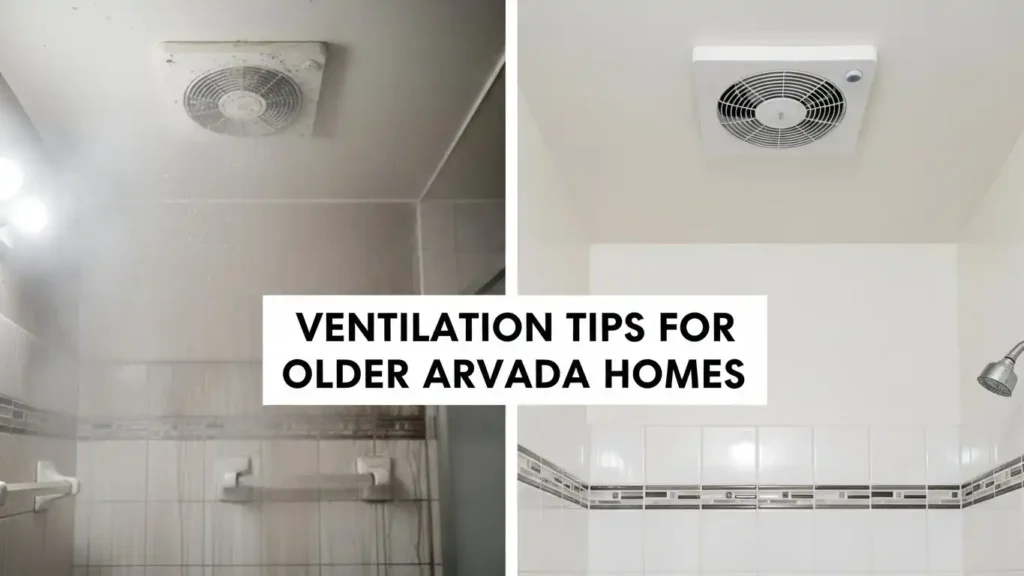
Older Arvada homes often have tight attic spaces, outdated duct routes, and original bathroom fans that no longer meet modern ventilation needs. These homes require a few specific adjustments to improve airflow without causing structural damage or major remodeling.
Fix Duct Issues Caused by Cramped Attics
Many older Arvada attics have limited space, forcing ducts to bend around framing or insulation. Straightening the duct, replacing crushed sections, or switching to smooth-walled ducting improves airflow immediately. Even small adjustments can make a noticeable difference in moisture control.
Address Insulation Blocking Vent Paths
Insulation that shifts or settles over time can block vents without anyone noticing. When insulation covers the duct outlet or fan housing, steam cannot escape properly. Clearing these blockages restores airflow and prevents moisture from building up in both the bathroom and attic.
Replace Fans Without Damaging Older Structures
Older ceilings and wall structures may not support large, modern exhaust fans without reinforcement. When upgrading, choose a fan that fits the existing opening or requires minimal modification. This avoids damage while still improving ventilation strength.
Improve Ventilation Without Full Remodeling
If a remodel isn’t planned soon, small upgrades help manage humidity until larger work is possible. Options include installing a more powerful fan, adding a window vent, sealing gaps around ducting, or using humidity-sensing controls. These improvements reduce moisture while preserving the home’s current layout.
Preventing Future Ventilation Problems
Proper ventilation needs regular attention to stay effective. Simple habits and routine maintenance help Arvada bathrooms stay dry, reduce mold risk, and protect materials from moisture damage. These steps keep airflow strong and prevent issues from returning.
Clean Exhaust Fans Every 3–6 Months
Dust and lint collect on fan blades and inside the housing. This buildup slows airflow and reduces how much moisture the fan can remove. Cleaning the fan cover, blades, and interior improves performance and extends the life of the system.
Run the Fan for at Least 20 Minutes After Showers
Steam continues to rise even after the water is turned off. Running the fan long enough helps remove leftover humidity and prevents moisture from settling on walls, ceilings, and grout. A timer switch makes this routine easier.
Use Timers and Humidity Controls
Timer switches ensure the fan runs long enough to clear the room. Humidity-sensing controls turn the fan on automatically when moisture rises. These tools help maintain proper ventilation without relying on manual operation.
Reseal Grout and Caulking to Reduce Moisture Traps
Grout, caulking, and joints around tiles can absorb moisture if not sealed properly. Keeping these areas sealed prevents water from soaking in, which reduces mold growth and protects the underlying structure.
When to Call a Professional
Some ventilation problems go beyond dust buildup or weak airflow. When moisture starts damaging materials or the ventilation system can’t keep up, a professional evaluation helps you find long-term solutions. This is especially important in older Arvada homes where duct routes, insulation, and structural limits create additional challenges.
Mold Returning Even After Cleaning
If mold keeps coming back despite regular cleaning, the root cause is usually trapped humidity. A professional can check airflow, inspect ducts, and identify hidden moisture pockets. Fixing the ventilation issue prevents mold from returning.
Structural Moisture Damage or Ceiling Stains
Dark spots, peeling paint, soft drywall, or ceiling stains signal moisture entering the structure. These issues require more than basic fan upgrades. A professional can determine whether the problem comes from weak ventilation, duct leaks, or improper vent routing.
Very Weak Airflow Despite Upgrades
If a stronger fan or cleaned ducts still produce weak airflow, the problem may be deeper in the system. Crushed ducts, blocked vents, or attic routing errors often require professional correction to restore proper ventilation.
Uncertain Duct Routing in Older Arvada Homes
In older homes, duct paths may be hidden behind walls or covered by insulation. A professional can locate the exact route, identify obstructions, and confirm whether the fan vents outside or into the attic. Correcting poor routing is essential for proper moisture control.
Bathroom ventilation problems are common in Arvada, especially in older homes with undersized fans, long duct runs, or outdated venting systems. When steam can’t escape, humidity builds up and damages surfaces, grout, paint, and fixtures. Understanding how ventilation fails and how to fix it helps protect your bathroom from long-term moisture issues.
Upgrading to the right fan size, improving duct routing, and adding humidity controls make a measurable difference. These changes keep your bathroom dry, reduce mold growth, and extend the life of your materials. With the right upgrades and maintenance, Arvada homeowners can create a bathroom that stays comfortable, clean, and healthy.